
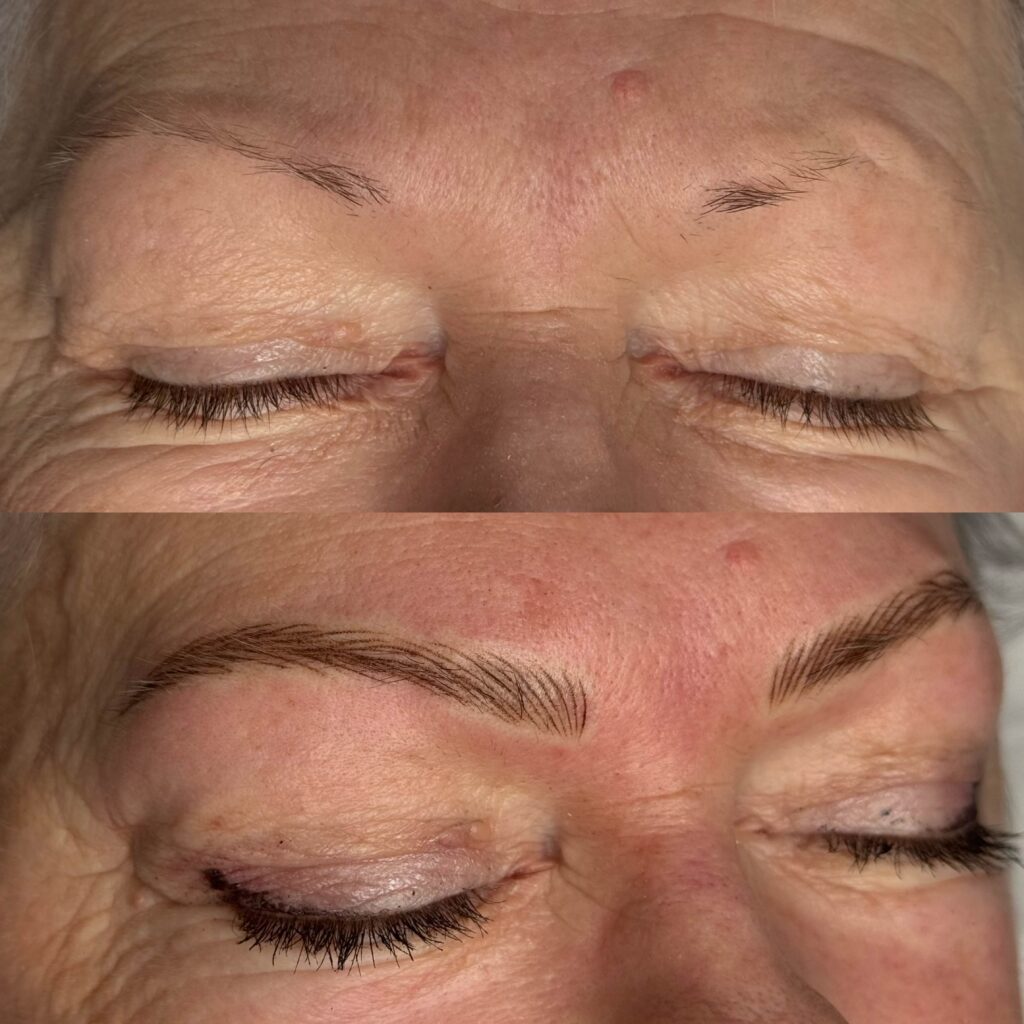
If you’ve been researching eyebrow treatments in Mississauga, you’ve likely come across both nano brows and microblading. They look similar in before-and-after photos, but they work very differently — and the difference matters for your skin type, lifestyle, and how long your results will last.
This guide breaks down exactly how each technique works, who each one suits best, and how to decide which is the right choice for your brows.
What Is Microblading?
Microblading is a semi-permanent brow technique that uses a handheld blade tool to make fine cuts in the skin, depositing pigment into those cuts. The resulting strokes mimic individual brow hairs, creating a natural, hair-like effect.
The tool is manual — no machine is used. The artist draws each stroke by hand, which means results depend heavily on the technician’s skill and pressure control.
How microblading sits in the skin
Microblading deposits pigment into the superficial dermis. Because the cuts are shallow, the pigment sits close to the surface. This is why microblading fades faster than machine techniques — pigment in shallow layers breaks down more quickly and is more affected by oily skin and sun exposure.
What Are Nano Brows?
Nano brows (also called nano needling or machine hair strokes) use a digital tattoo machine with a single, ultra-fine needle to implant pigment into the skin. Like microblading, the result looks like individual brow hairs — but the process is fundamentally different.
Because a machine controls the needle depth and speed, the strokes are more consistent and the trauma to the skin is less than with a blade. The needle creates tiny punctures rather than cuts, which means the skin heals faster and the pigment retention is typically better.
Why many artists now prefer nano brows
Over the past few years, the permanent makeup industry has shifted significantly toward nano brows. The main reasons:
- Better pigment retention — machine implantation is more precise, so more pigment stays after healing
- Works on more skin types — including oily and mature skin where microblading often struggles
- Less skin trauma — punctures vs. cuts means faster healing and less risk of scarring
- Longer lasting — nano brows typically last 1–2 years longer than microblading
Nano Brows vs Microblading: Side-by-Side Comparison
| Feature | Microblading | Nano Brows |
|---|---|---|
| Tool used | Manual handheld blade | Digital tattoo machine |
| Technique | Cuts in skin | Needle punctures |
| Hair-stroke effect | Yes | Yes |
| Best for skin type | Normal to dry | All skin types |
| Longevity | 12–18 months | 2–3 years |
| Healing time | 7–14 days | 7–10 days |
| Touch-up needed | At 6–8 weeks | At 6–8 weeks |
| Risk of scarring | Moderate (blade cuts) | Lower (punctures) |
| Suitable for oily skin | Often not | Yes |
Which Skin Types Suit Each Technique?
Microblading: better on dry, normal skin
Microblading works best on clients with dry to normal skin. When skin is dry, the cuts heal cleanly and the hair strokes remain crisp and defined. On oily skin, excess sebum can push pigment out during healing, causing strokes to blur or fade unevenly.
Mature skin with thinner texture can also be problematic for microblading — the blade can cause micro-tears that don’t retain pigment as well.
Nano brows: works on all skin types
Nano brows are suitable for dry, normal, oily, combination, and mature skin. The machine implants pigment more precisely and at a more consistent depth, which means oily skin can’t displace it as easily. This is why nano brows have become the recommended option for most clients at studios like Victoria Studio.
How Long Does Each Technique Last?
Microblading typically lasts 12 to 18 months before a refresh is needed. Nano brows typically last 2 to 3 years. Both techniques require a touch-up appointment 6–8 weeks after the initial session.
Can You Switch From Microblading to Nano Brows?
Yes — in many cases, nano brows can be done over faded microblading. If microblading has faded significantly and evenly, a skilled artist can work over the existing work with nano technique to refresh and refine the brows.
At Victoria Studio, we offer consultations where we assess your existing brows, skin type, and history before recommending any treatment.
Which One Should You Choose?
For most clients in 2026, nano brows are the recommended choice. They work on more skin types, last longer, cause less trauma, and deliver more consistent results. The most reliable way to know which is right for your specific skin is a consultation with a qualified permanent makeup artist.
Frequently Asked Questions
Is nano brows the same as microblading?
No. Both create hair-stroke effects, but microblading uses a manual blade to cut the skin while nano brows use a machine needle to puncture it. The technique, tool, healing, and longevity are all different.
Does nano brows hurt more than microblading?
Most clients find nano brows as comfortable as or more comfortable than microblading. Topical numbing cream is applied before both procedures.
Can I get nano brows if I have oily skin?
Yes — nano brows are well-suited to oily skin, where microblading often doesn’t retain as well.
If you’re in the Mississauga area, book a consultation at Victoria Studio. We’ll assess your brows and skin type and recommend the right approach for your goals.
Victoria is a certified permanent makeup artist and educator based in Mississauga. She specializes in natural-looking brow techniques including nano brows, powder brows, and combo brows.
Pingback: How Long Do Powder Brows Last? Fading & Longevity Guide