
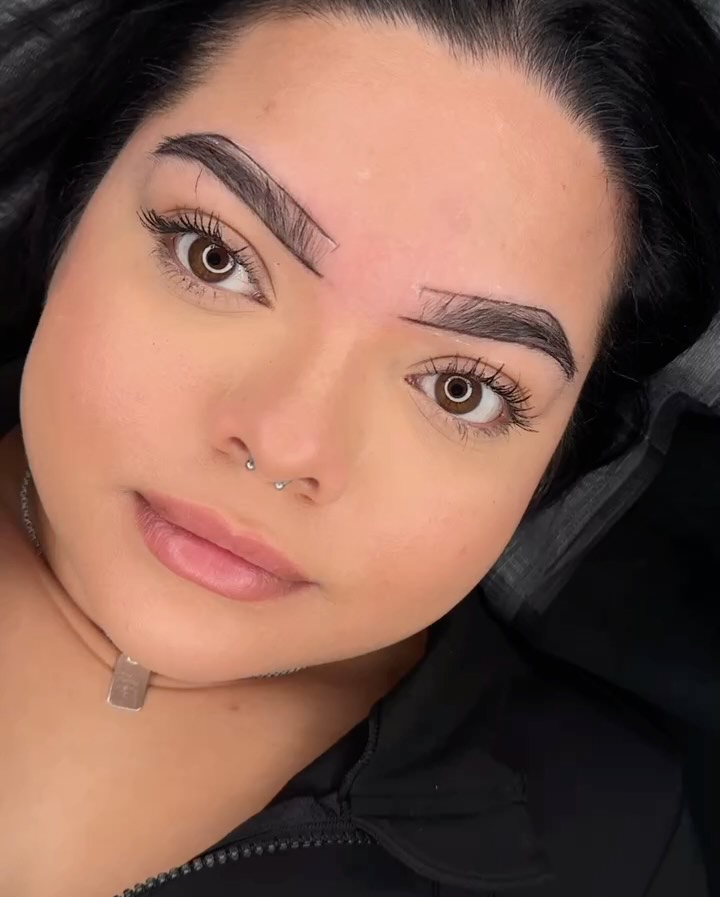
There is no such thing as a one-size-fits-all brow. And yet, so many people walk away from beauty appointments with brows that feel slightly off — too arched, too flat, too close together, or simply not quite them.
As a certified permanent makeup artist in Toronto, brow customization is at the heart of everything I do at Victoria Studio. Before I ever pick up a tool, I spend significant time studying your face — your bone structure, your natural brow hair, your eye placement, and the proportions that make you uniquely you.
In this post, I want to walk you through exactly how I approach brow shape customization — because understanding the process helps you arrive at your appointment informed, confident, and excited about your results.
Why Brow Shape Matters More Than You Think
Your eyebrows are one of the most expressive and structurally important features on your face. They frame your eyes, define your forehead, and play a major role in how balanced and proportionate your features appear.
A brow shape that works beautifully on one person can look completely wrong on someone else — even if both faces are objectively attractive. That is because brow design is not about copying a trend or following a popular arch. It is about finding the shape that creates harmony specifically for your face.
This is why I never use brow stencils or template shapes at Victoria Studio. Every brow is mapped, measured, and designed from scratch — for you.
Step One: Reading Your Facial Structure
The first thing I look at before designing any brow is the overall shape and proportions of your face. Different facial structures benefit from different brow characteristics — and understanding this is the foundation of everything that follows.
Oval Face
Oval faces are considered the most balanced facial shape, with a forehead that is slightly wider than the chin and gently rounded proportions. This face shape is the most flexible when it comes to brow design — most shapes work well. I typically recommend a soft, slightly arched brow that maintains the natural balance without adding unnecessary drama. The goal is to keep things elegant and unfussy.
Round Face
Round faces have similar width and length measurements, with soft, curved edges and full cheeks. For this face shape, I work to create the illusion of length and definition. A higher arch with a slightly extended tail draws the eye upward and outward, making the face appear longer and more sculpted. I avoid very flat or rounded brows, as these tend to amplify the roundness of the face rather than balance it.
Square Face
Square faces have strong, angular jaw lines and a forehead that is similar in width to the jaw. My approach here is to soften those angles while maintaining the natural strength of the face. A curved brow with a gentle arch works beautifully — it introduces softness without fighting the bone structure. I avoid very angular or sharp brow shapes, which tend to make square features feel harsh rather than defined.
Heart-Shaped Face
Heart-shaped faces are wider at the forehead and taper to a narrow, pointed chin. Because the forehead is already the widest part of the face, I keep the brows lower, fuller, and with a softer arch to avoid drawing too much attention upward. A rounded brow shape with minimal lift helps balance the wider forehead with the narrower lower face, creating a more harmonious overall appearance.
Long or Oblong Face
Long faces benefit from brows that create horizontal width rather than vertical height. I design flatter brows with minimal arch for this face shape — the idea is to draw the eye across the face rather than up and down. A fuller, slightly thicker brow also helps break up the vertical length and creates a more balanced, proportionate appearance.
Step Two: The Three-Point Mapping Method
Once I have assessed your facial structure, I move into the precision mapping phase. I use a professional brow mapping technique to establish three key anchor points for each brow:
- The head — where the brow begins, aligned with the inner corner of the eye
- The arch — the highest point of the brow, positioned to flatter your bone structure
- The tail — where the brow ends, typically aligned with the outer corner of the eye and the side of the nostril
These measurements are taken using a flexible mapping string and precise facial measurements — never guesswork. I also assess the symmetry between both brows, taking into account any natural asymmetry in the face (which every face has to some degree), and adjusting accordingly.
The goal of mapping is not to make both brows identical — it is to make them appear balanced when you look at your face as a whole. Sisters, not twins, as we say in the industry.
Step Three: Factoring In Your Natural Brows
Your existing brow hair — its direction, density, and natural arch — plays an important role in how I design your permanent makeup brows. I always work with your natural hair growth wherever possible, rather than against it.
During the consultation, I assess:
- Where your natural hair grows and in which direction
- Areas of sparseness that need filling
- Whether your natural arch position works for your face shape, or whether a subtle adjustment would be more flattering
- How much of the brow is visible versus hidden by existing hair
For clients with very sparse or nearly absent brows — due to over-plucking, alopecia, or natural thinning — I have more creative freedom in the design. In these cases, I rely entirely on the facial mapping to build the ideal shape from the ground up using techniques like nano brows or powder brows.
Step Four: Choosing the Right Technique for Your Skin
Brow shape is only part of the equation. The technique I choose to apply the pigment also makes a significant difference in the final look — and the right choice depends on your skin type, lifestyle, and the result you are hoping for.
At Victoria Studio, I offer three main brow techniques:
Powder Brows
Powder brows use a soft shading technique to create a filled-in, makeup-like finish that still looks natural and defined. This technique works beautifully on all skin types, including oily skin, and produces the most durable long-term results.
Nano Brows
Nano brows use an ultra-fine digital needle to create individual hair strokes that mimic the look of real brow hair. This technique creates an incredibly realistic, textured result and is ideal for clients who want a very natural finish or who have a good amount of existing brow hair.
Combo Brows
Combo brows combine hair stroke detailing at the front of the brow with soft powder shading through the body and tail. This creates depth, dimension, and a beautifully realistic result that suits a wide range of clients.
Step Five: Drawing on the Shape Before Any Pigment Is Applied
Before I begin any permanent makeup application, I draw the mapped brow shape directly onto your skin using a removable pencil. This allows you to see exactly what your brows will look like before anything permanent happens.
I take this step very seriously. I encourage you to look in the mirror from multiple angles, to stand up and check the shape in natural light, and to tell me honestly what you think. If you want more arch, less tail, a slightly thicker front, or a softer fade — we adjust it together until you are completely happy.
Only once you have approved the shape do we begin the treatment. Your comfort and confidence in the design is non-negotiable.
Your Face Is Unique — Your Brows Should Be Too
Brow customization is not a quick step in the process — it is the process. At Victoria Studio in Toronto, every client receives a thoughtful, personalized brow design that considers their face shape, bone structure, natural hair, skin type, and personal style.
The result is brows that look like the best version of yours — not someone else’s.
If you are ready to experience truly customized brow design through powder brows, nano brows, or combo brows in Toronto, I would love to meet you. Book your free consultation at Victoria Studio and let’s design the brows you have always wanted.